What Happens When a Homeowner Can't Reach You on a Saturday Night
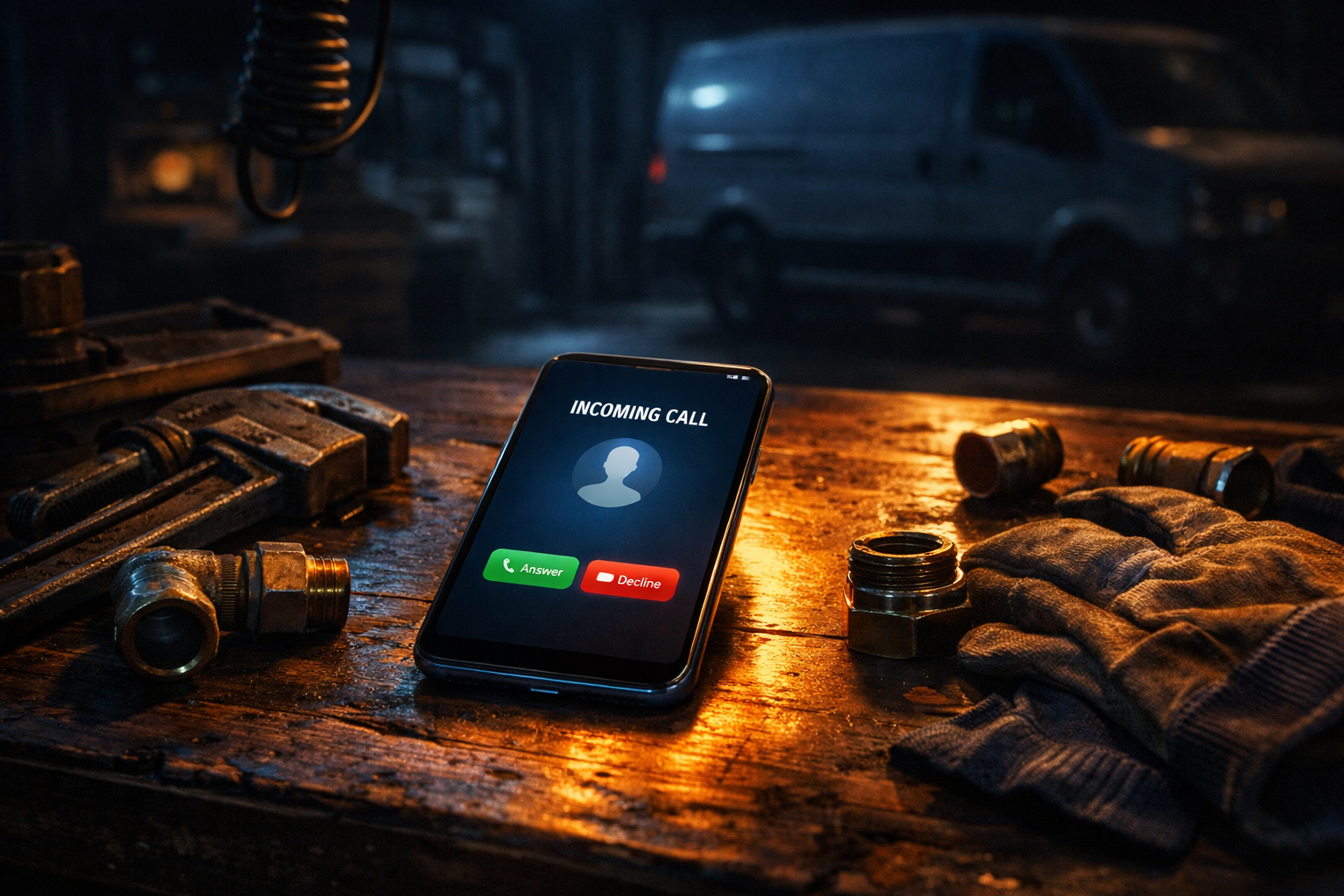
It's 9:47 PM on a Saturday. You're on the couch, boots off, finally done with a long week. Your phone buzzes. You see the call coming in, but you're beat. You let it go to voicemail.
The homeowner on the other end? Their water heater just flooded the garage. They're panicking. They need help now, not Monday morning. They don't leave a voicemail — they just move on to the next plumber on Google. Thirty seconds later, your competitor picks up. Job gone.
That's not a rare scenario. It's happening in your market every single weekend. And if you're running a small shop — one to ten trucks, maybe just you and a helper — you can't answer every call. You're on a ladder. You're under a sink. You're trying to have dinner with your family. But those missed calls? They're walking out the door with money in their pockets, heading straight to whoever answers first.
The Real Cost of Missing After-Hours Calls
Most trades business owners underestimate how much revenue they lose after hours. You might think, "I'll call them back in the morning." But here's the reality: emergency calls don't wait. When someone needs an emergency plumber, they're not building a list and comparing quotes. They're calling down the line until someone picks up.
Even non-emergency calls have a short shelf life. A homeowner who reaches out Saturday night about a Monday morning repair? By Sunday afternoon, they've already booked someone else. You never even knew they called.
And it's not just about the immediate job. It's about the lifetime value of that customer. One missed call can mean losing years of repeat business, referrals, and maintenance contracts. That water heater call could've turned into a drain cleaning next month, a bathroom remodel next year, and three neighbor referrals in between.
The math is brutal. If you're missing even five calls a week at an average ticket of $400, that's $104,000 a year walking away. And for most shops, it's a lot more than five.
Why Traditional Answering Services Fall Short
Some shop owners try the traditional answering service route. You know the type — a call center where someone reads from a script, takes a message, and emails it to you. Maybe they text you if it's marked "urgent."
The problem? They don't know your business. They can't tell the difference between a true emergency and someone who just wants a quote. They can't check your calendar. They can't qualify a lead or explain your pricing. They're just expensive voicemail with a pulse.
And they're not cheap. Most traditional services run $200 to $500 a month for basic coverage, and they still don't book jobs or filter out tire-kickers. You're paying for someone to forward you work you still have to sort through yourself.
Hiring a full-time dispatcher or office person? That's $35,000 to $50,000 a year before taxes and benefits, and they're still only available during business hours unless you're paying overtime or running shifts. For most small shops, that's not realistic.
What Homeowners Really Want When They Call
Put yourself in the customer's shoes. They call your shop at 10 PM because their basement's flooding, or their AC died in July, or they've got sparks coming out of an outlet. What do they want?
They want someone to pick up. They want to know you're coming. They want to feel heard and helped, not shuffled to voicemail.
If they get a real response — someone who answers their questions, understands the urgency, and gets them on the schedule — they're booking with you. If they get voicemail or a clueless answering service? They're gone.
That first impression matters. A homeowner who gets a fast, professional response after hours will remember it. They'll leave a five-star review. They'll call you first next time. They'll tell their neighbors.
How an Emergency Plumber Answering Service Should Actually Work
The best answering solution for a trades shop isn't a warm body reading a script. It's a system that understands your business, knows your availability, qualifies leads in real time, and gets you only the calls that matter.
That means:
- Answering every call, 24/7, in seconds — no hold music, no voicemail
- Asking the right questions to figure out if it's a real emergency or something that can wait
- Checking your calendar and booking jobs on the spot when it makes sense
- Routing true emergencies to you immediately, and handling everything else so you're not buried in low-priority calls at midnight
- Capturing lead info so nothing falls through the cracks
This isn't about replacing you. It's about making sure you never lose a job because you couldn't get to the phone. It's about protecting your time and your reputation while making sure every caller feels taken care of.
Your Phone Should Work Even When You're Not
Here's the shift: your phone line shouldn't depend on whether you're available to pick up. It should be working for you around the clock, filtering the noise, booking the work, and alerting you when it's truly urgent.
The shops that grow aren't the ones with the best trucks or the fanciest website. They're the ones that answer the phone. Every time. And if you can't personally answer every call — because you're human and you have a life — then you need someone or something that can.
An emergency plumber answering service isn't a luxury. It's the difference between a shop that's always scrambling to catch up and one that's steadily booked, growing, and in control.
Stop losing Saturday night calls. Stop wondering how many jobs you missed this week. Start treating every ring like the revenue opportunity it is.
Put Wrenchy to Work in Your Shop
If you're tired of missing calls and losing jobs after hours, it's time to meet Wrenchy. He's the AI answering agent built specifically for trades businesses, and he works around the clock so you don't have to.
Wrenchy picks up every call in seconds. He qualifies leads, books jobs, routes emergencies to you in real time, and handles the routine stuff so you're only interrupted when it truly matters. He knows your pricing, your schedule, and your service area. He's like adding a sharp dispatcher to your team — without the payroll.
WrenchBot AI is offering a 14-day free trial — no credit card required — and most shops are up and running within 24 hours. If you're serious about answering every call and keeping your pipeline full, this is the simplest way to make it happen.
Stop leaving money on the table. Put Wrenchy to work and start capturing every lead that calls your shop.
Comments
Post a Comment