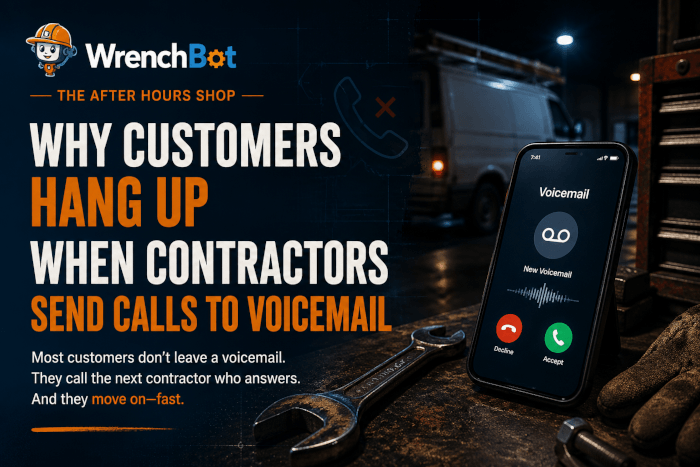
Most contractors assume that if a customer really needs help, they’ll leave a voicemail.
Unfortunately, that’s usually not what happens anymore.
Today, most people expect immediate responses from businesses. They’re used to ordering food, scheduling appointments, and getting answers instantly from their phones. That expectation doesn’t disappear when they need a plumber, HVAC technician, electrician, or roofer.
In fact, it becomes even stronger.
When someone is calling a trades business, they’re often already stressed. Maybe the AC stopped working during a heatwave. Maybe water is leaking through the ceiling. Maybe the power is out in half the house. By the time they pick up the phone, they’re looking for reassurance as much as they’re looking for service.
Then they hit voicemail.
At that point, many customers immediately lose confidence. It’s not always rational, but it’s real. Voicemail feels like uncertainty. People start wondering:
- “Will they even call me back?”
- “How long will this take?”
- “Should I just try somebody else?”
So they do.
Most customers don’t stop after one unanswered call. They move down the list and contact the next company they can find online. Usually, the business that answers first wins the job — even if they aren’t the best company.
That’s what makes missed calls so frustrating for small contractors. You can lose work without ever realizing the opportunity existed in the first place.
And the problem gets worse after hours.
Many contractors are incredible at their trade but simply don’t have the staff to answer calls at night, on weekends, or while they’re actively on job sites. One missed evening call might not seem like a big deal, but over time those missed opportunities add up to thousands of dollars in lost work.
That’s one reason more trades businesses are looking for alternatives to traditional voicemail. Customers don’t necessarily need a full conversation right away. They just want acknowledgment that somebody is there and ready to help.
Even a simple response can dramatically improve customer confidence:
“We received your call.”
“We’re gathering your information.”
“A technician will contact you shortly.”
That reassurance matters.
At WrenchBot AI, we built Wrenchy specifically to help trades businesses avoid losing leads after hours. Wrenchy answers calls in your business name, gathers customer details, identifies emergencies, and helps ensure customers aren’t left wondering if anybody will respond.
Because in today’s world, voicemail often isn’t a pause in the conversation. It’s the end of it.
Get Wrenchy for your business. Sign up for your free trial at WrenchBotAI.com.
Comments
Post a Comment